

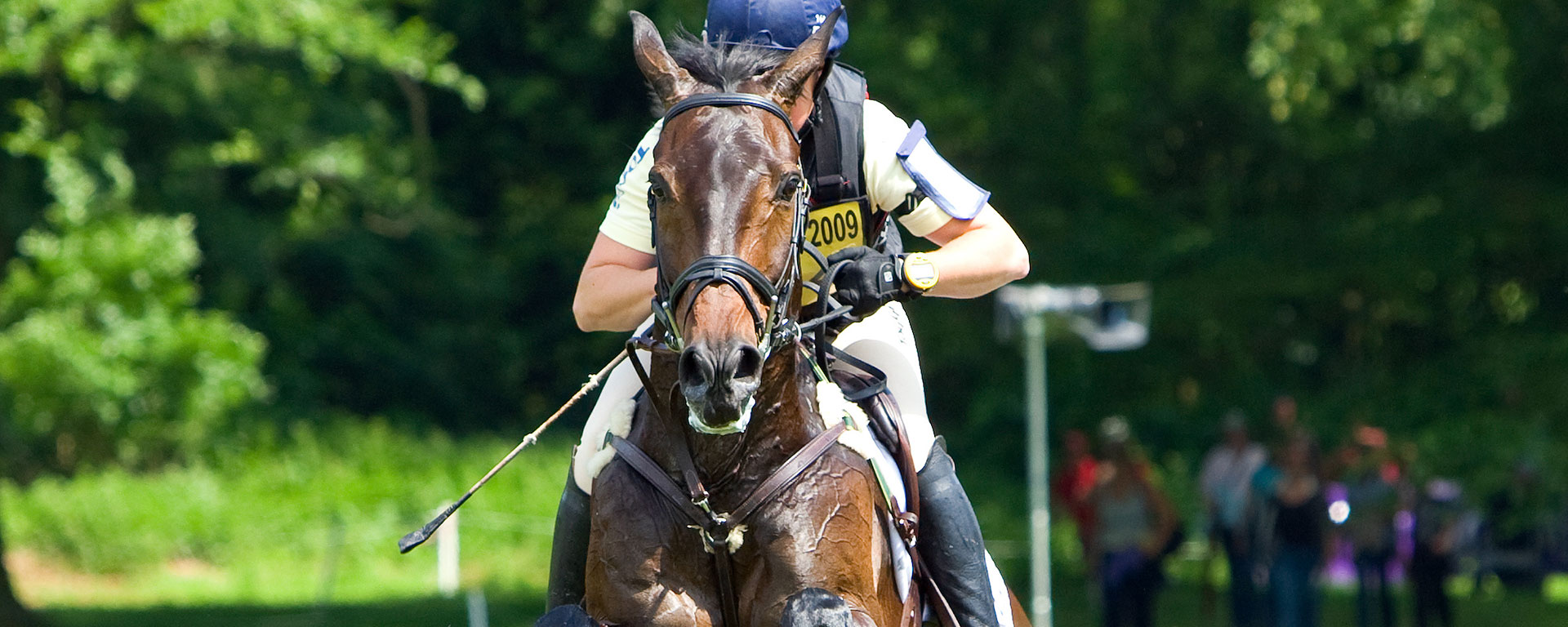
Timing is one of the most crucial elements of the traditional Long Format Event. Unlike the more common modern short format competitions, the classic test of endurance and skill splits the Cross Country into four distinct phases — A, B, C, and D. Each phase has its own purpose, rhythm, and challenges, making time management a key factor for success.
Riders not only need to conserve their horse’s energy across the Roads and Tracks and Steeplechase phases, but also ensure they arrive at the start of Phase D — the main Cross Country course — with the horse fit, focused, and ready to perform. Balancing pace, stamina, and accuracy across all four phases can be difficult to navigate, but it is this challenge that makes the Long Format such a true test of partnership between horse and rider.
What are the different time allocations in the long format event?
Optimum Time
This is the ideal time calculated for each course, based on the length of the track and the required speed. Riders aim to finish as close to this time as possible.
Time Penalties
Go over the optimum, and you’ll start to collect penalties — typically 0.4 points for every second over. These small additions can quickly make the difference on the leaderboard.
Time Limit
Alongside the optimum, there’s also a maximum time allowed. This is usually set at double the optimum time and acts as a firm cut-off. Exceed it, and it means elimination, no matter how well you’ve ridden.
Advice from Cameron Beer
Getting the timings right across phases A, B, C, and D is absolutely vital — and your stopwatch will quickly become your best friend. With the set speeds and distances, you’ll need to do a bit of quick maths to work out exactly where you should be at every single kilometre.

“In my opinion, it is a very good idea to then write these calculations on a piece of paper and sellotape it to your arm so that you know where you should be at every Kilometer mark. It’s best for it to be laminated or in something to stop it from getting wet.”
For Phase A, I would be counting up with my watch. Phase B I would be counting down and then I would let my watch count up again for Phase C. If you’re having a bit of trouble with this, I would advise chatting to your coach or a British Eventing Howden Way Coach to ask for any advice.”
Cross Country Advice from British Eventing
Each Cross Country phase is timed separately, so if you lose a little time in one phase, you can’t make it up in the next — every section counts on its own.
If you go over the time allowed in any phase, unfortunately it does mean elimination — so keeping an eye on your timings is really important. Don’t worry though, the optimum time for each phase is easy to work out: just divide the distance by the set speed, as shown below:
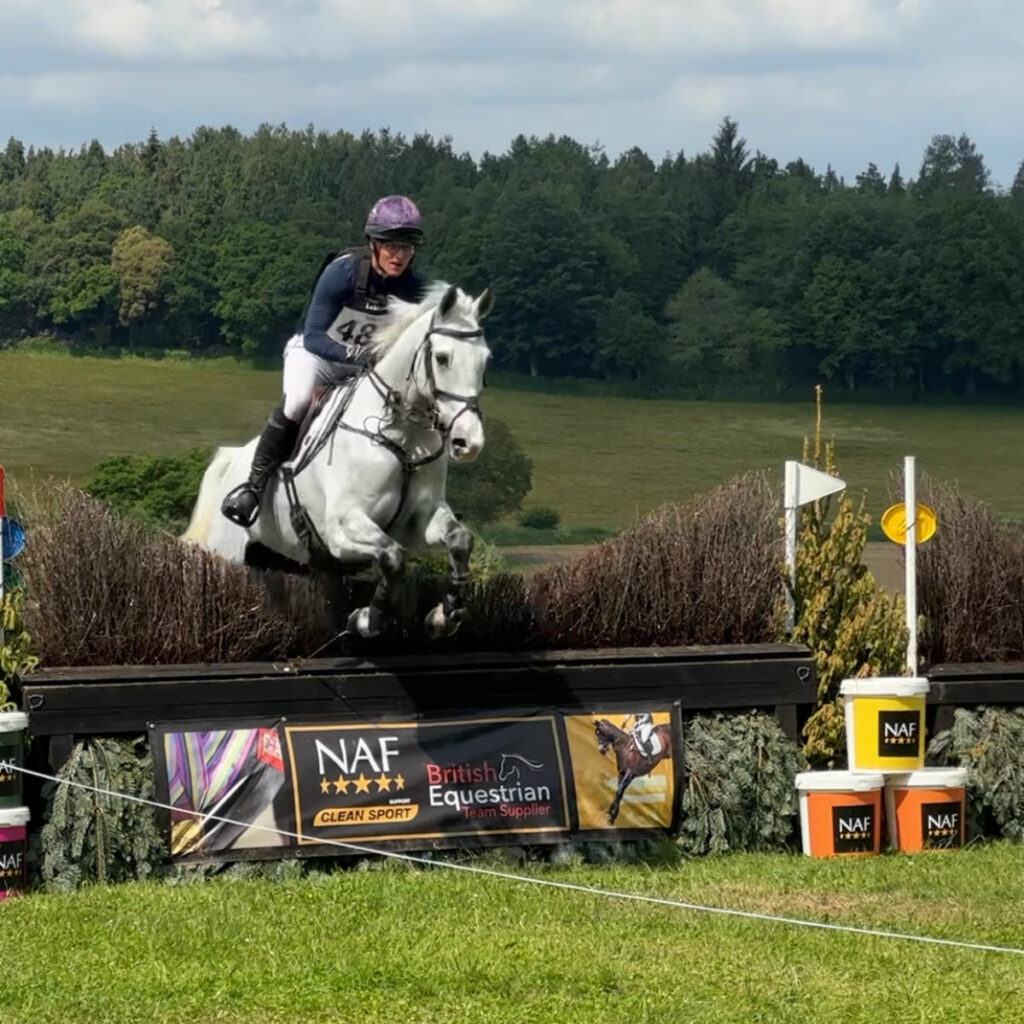
Phase A – Roads and Tracks
- Distance: 3,520m – 4,400m
- Speed: 220 mpm
- Time: Time limit of 120% of the optimum time which if exceeded incurs elimination (Every second in excess of the optimum time incurs one penalty).
Phase B – Steeplechase
- Distance: 1,375m – 1,650m
- Speed: 520 mpm
- Time: Time limit of 200% of the optimum time which if exceeded incurs elimination (Every second in excess of the optimum time incurs 0.8 penalties).
Phase C – Roads and Tracks
- Distance: 4,000m – 6,400m
- Speed: 160 mpm
- Time: Time limit of 120% of the optimum time which if exceeded incurs elimination (Every second in excess of the optimum time incurs one penalty).
Phase D – Cross Country
- Distance: 2,475m – 3,150m
- Speed: 450 mpm
- Time: Time limit of 200% of the optimum time which if exceeded incurs elimination (Time penalties as per BE Rule Book Clause 6.3.10).